

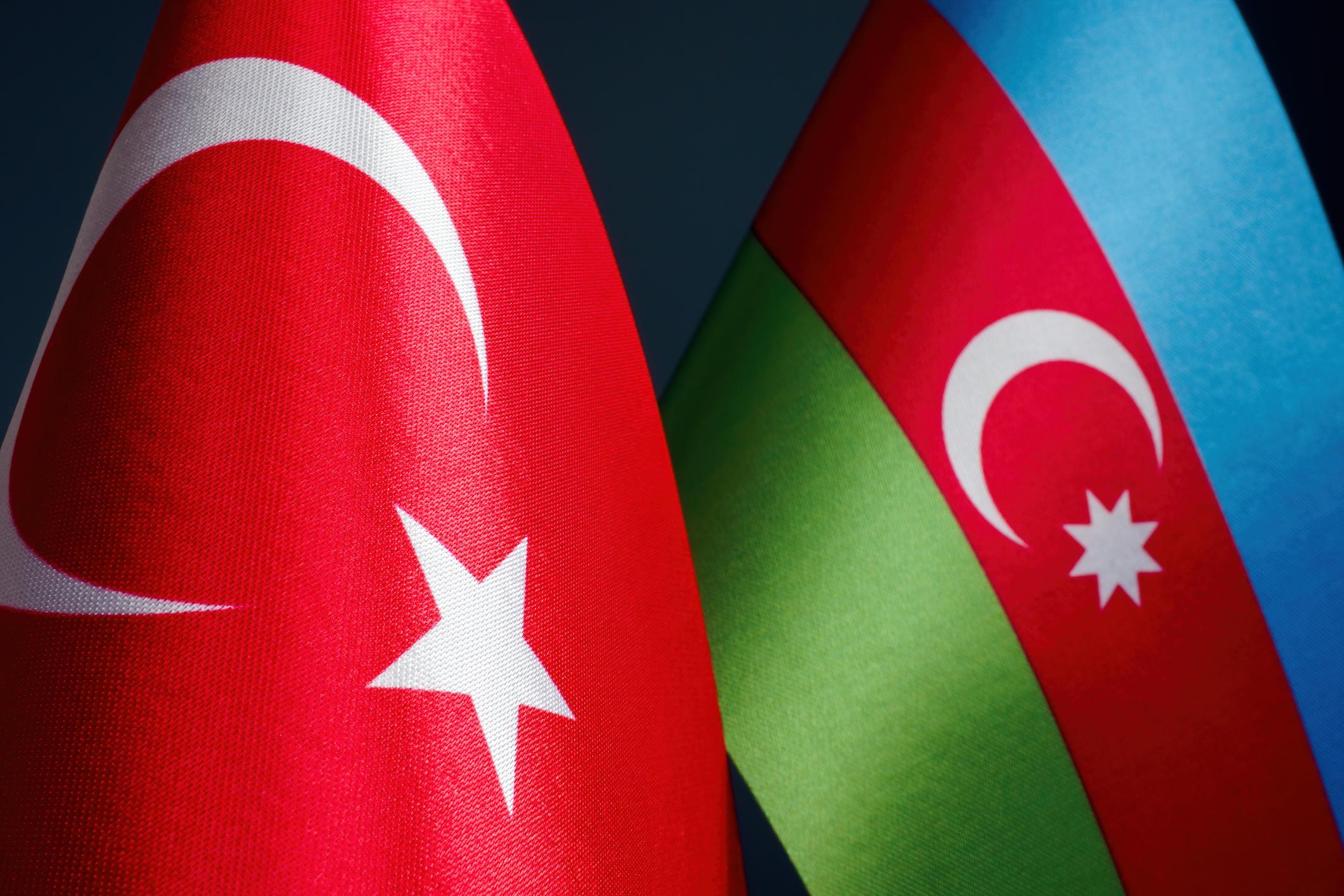
Azerbaijan’s restrictions on Islamic headscarves in schools have triggered an unusually public dispute with close ally Türkiye, with criticism from Turkish politicians drawing accusations of interference from President Ilham Aliyev’s ruling party.
The controversy has also prompted criminal proceedings against people in Türkiye. In its latest announcement on 20 October, Azerbaijan’s Prosecutor General’s Office said seven more individuals had been charged over alleged calls for the violent overthrow of the government and incitement of religious hatred.
The dispute centres on school clothing regulations adopted by Azerbaijan’s Cabinet of Ministers on 21 September. These prohibit additional clothing that departs from prescribed uniforms or is incompatible with the secular character of general education.

Although the rules do not explicitly mention the hijab, some schools have enforced them as a headscarf ban, with reports and footage showing girls being denied access to lessons. Separate requirements approved on 6 October also oblige teachers in state schools to dress in accordance with the principle of secular education.
Reports of pupils and teachers being turned away have provoked protests. On 12 October, Azerbaijan’s Interior Ministry said 37 people had been detained for disrupting public order while opposing enforcement of the rules.
Criticism in Türkiye intensified that day when Oktay Saral, a senior adviser to President Recep Tayyip Erdoğan, condemned the exclusion of headscarf-wearing pupils and urged Baku to reverse its position.
“We expect Azerbaijan to reverse this mistake as soon as possible,” he wrote on X. Members of Erdoğan’s governing Justice and Development Party (AKP) also challenged the restrictions.
Aliyev’s New Azerbaijan Party (YAP) responded sharply on 13 October, describing the Turkish criticism as “populist and irresponsible” and accusing figures close to the AKP of participating in an increasingly hostile information campaign against Azerbaijan.
The party defended the education rules as measures based on equality, secularism and the rule of law, pointing out that Türkiye’s constitution also defines the state as secular.
It also invoked the countries’ familiar description of their relationship as “one nation, two states”, arguing that their shared identity gave neither country the right to interfere in the other’s domestic affairs or impose its political and ideological preferences.
The issue carries particular resonance in Türkiye, where restrictions once excluded headscarf-wearing women from universities and public employment. Erdoğan’s governments dismantled those restrictions in stages between 2010 and 2017, making the removal of such barriers an important part of the AKP’s political record.
In Azerbaijan, supporters of the regulations frame them as a defence of the country’s secular identity. Vasif Huseynov, a department head at the state-run Centre of Analysis of International Relations, linked the measures to concerns about Iranian religious influence. Critics, meanwhile, argue that excluding girls because of their headscarves infringes religious freedom and their right to education.
The exchanges have also drawn in disagreements over Azerbaijan’s close relations with Israel. YAP rejected Turkish criticism of those ties, saying they rested on international law and mutual interests, and maintained that they did not contradict Azerbaijan’s support for Palestinian rights and a two-state solution.
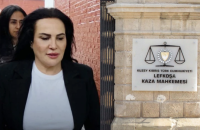
The criminal investigation has added another sensitive dimension. On 16 October, Azerbaijani prosecutors announced charges against Celal Çiftçi (pictured below), a columnist for the Şanlıurfa Olay newspaper, alleging that his social media material advocated a coup and religious violence. An Azerbaijani court issued an arrest warrant in his absence, and prosecutors sought assistance from Turkish authorities.

Turkish journalist Celal Çiftçi
The seven additional people charged on 19 October include Haksöz writer Rıdvan Kaya and commentator Fatih Tezcan. Prosecutors said the investigation concerned online material published between 25 September and 18 October, alongside speeches at demonstrations outside Azerbaijani diplomatic premises in Istanbul and Ankara.
The prosecutor’s office maintained that the statements went beyond criticism or expressions of religious belief and contained calls for violence. Its announcement did not reproduce the full speeches or posts, or include responses from those accused.
Despite the heated exchanges, senior Turkish figures have sought to contain the dispute. AKP deputy chairman Kürşad Zorlu urged respect for both countries’ sovereignty and said disagreements should be discussed within the family.
Foreign Minister Hakan Fidan met Aliyev in Baku on 15 October and emphasised the importance of preserving their strategic partnership. The two countries formalised their defence and security alliance through the 2021 Shusha Declaration.
Fidan said differences should be addressed through direct discussions, warning against allowing them to become propaganda on social media. His intervention underlined Ankara’s effort to manage public anger over the restrictions while protecting one of Türkiye’s closest international relationships.
President Erdoğan also marked Azerbaijan’s Restoration of Independence Day with a warm message on X on 18 October, referring to Aliyev as his “brother” and emphasising solidarity between their peoples in sorrow and joy. The message offered a further indication that Ankara wishes to prevent the dispute from souring bilateral relations.